CYNTHIA J. MACKAY, M. D., is a board-certified ophthalmologist, with comprehensive training in all aspects of eye care, and with special expertise in diseases of the retina and eye laser surgery.
Welcome.
I retired from active ophthalmology practice in August 2018. I practiced ophthalmology for over 40 years.
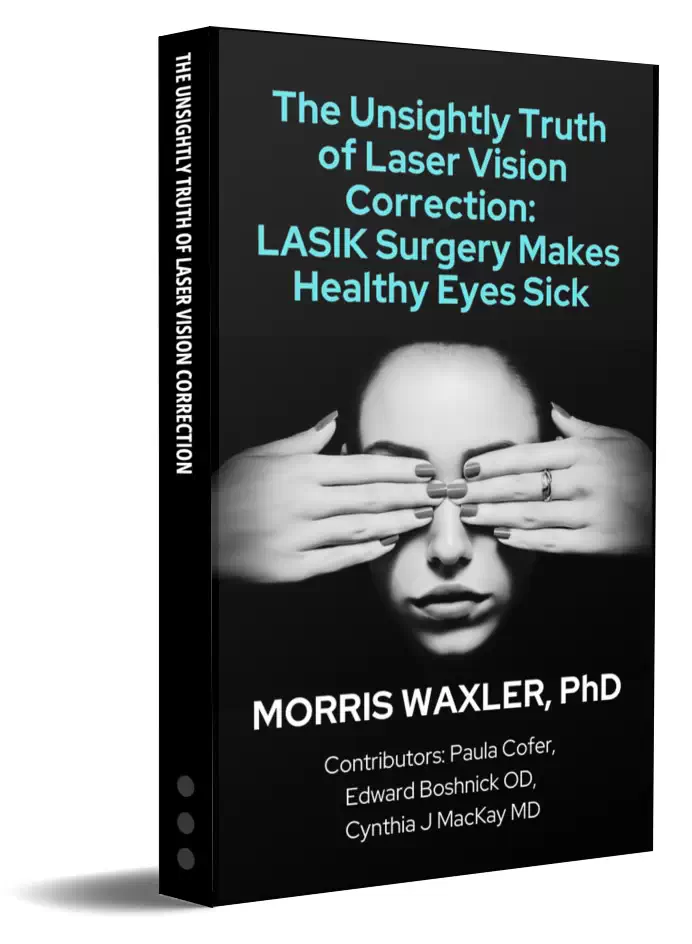
I have co-authored a book on LASIK Complications, “The Unsightly Truth of Laser Vision Correction: LASIK Surgery Makes Healthy Eyes Sick” The other authors include Morris Waxler, PhD, Paula Cofer, LASIK damaged patient, and Edward Boshnick, optometrist. The book was published in May 2024. It is available on Amazon.
I was the executive producer of a new movie, “Broken Eyes“, which premiered at the Minneapolis international film festival in April 2024. The movie is currently going to a number of other international film festivals. It will be ready for viewing by the public in about a year.
I have also published a memoir, “Making The Cut“, which describes my life as a surgeon and the events in my childhood and adulthood that led to success in the operating room. This book was published in May 2024. It is available on Amazon.
Please feel free to contact me for further information: Via Email: DrMacKay@protonmail.com.
I look forward to hearing from you.
Best Wishes,

Cynthia J MacKay MD
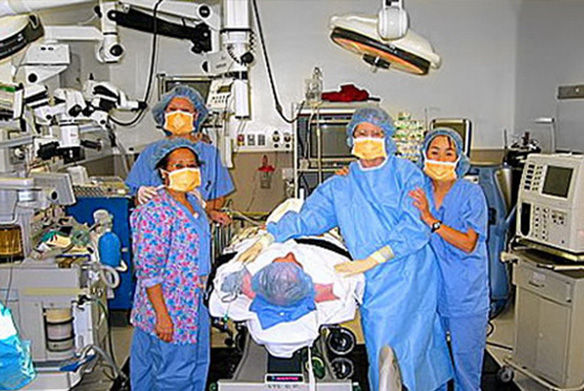
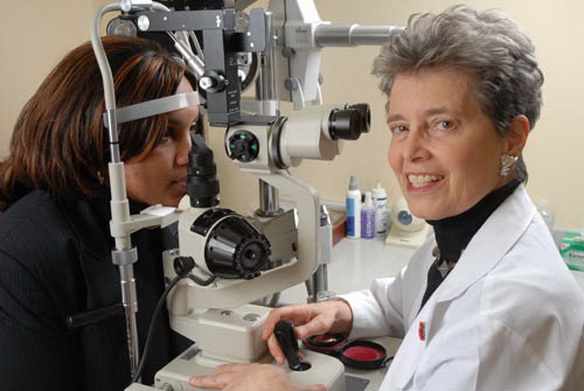
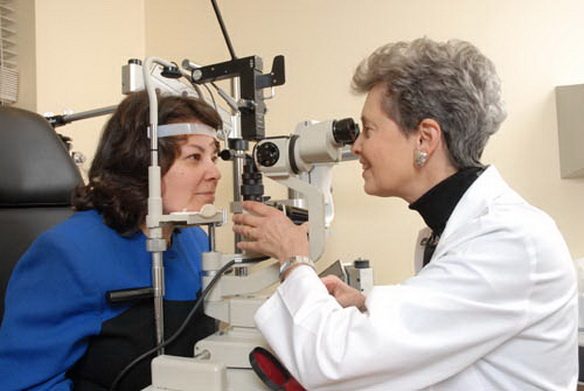

EXPERIENCE: Dr. MacKay was in practice for over 40 years and performed tens of thousands of eye surgeries. (more)
TRAINING: Dr. MacKay’s training has included Harvard University and Columbia University’s College of Physicians and Surgeons. (more)
RESEARCH: Dr. MacKay has lectured around the world on new developments in eye research, publishing more than 40 original peer reviewed articles. (more)
TEACHING: Dr. MacKay lectured at the world-renowned Lancaster Course for 17 years, where she trained thousands of new ophthalmology residents. (more)
AWARDS: Dr. MacKay has been recognized as an outstanding researcher (American Academy of Ophthalmology Honor Award) and teacher (Richard C. Troutman Master Teacher Award). She attained the title of Clinical Professor of Ophthalmology at Columbia University. (more)

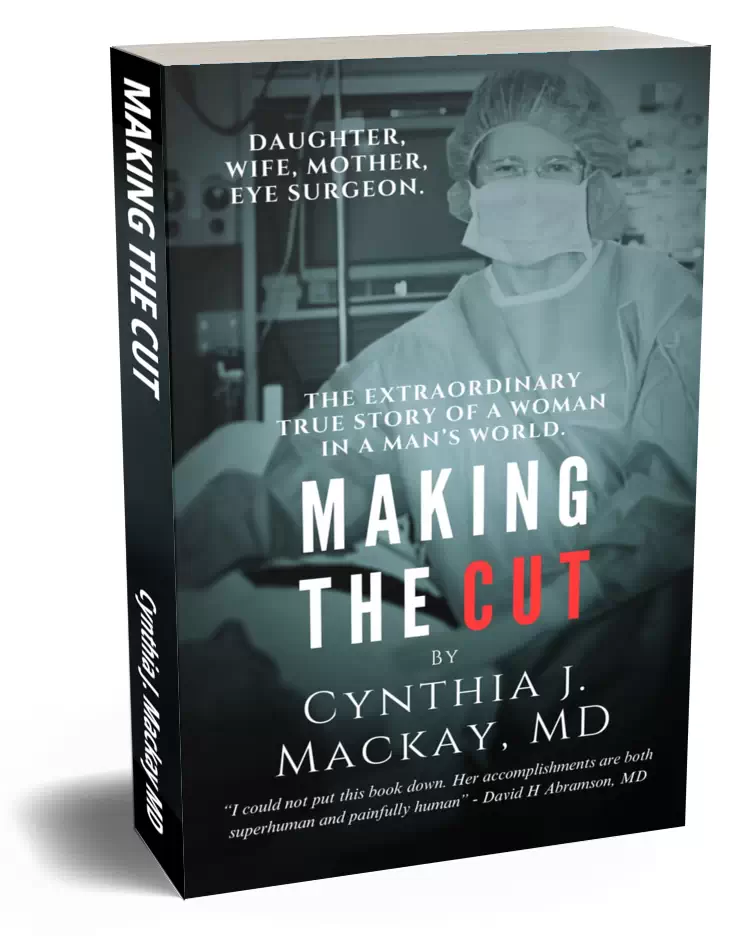
A retired eye surgeon looks back on her remarkable life and career.
MacKay, who was born in 1942, begins her autobiography with an extensive overview of her girlhood and young adulthood in the ’40s and early ’50s, when there were scarcely any examples of people living the life she’d go on to lead:
“The only female doctor I knew was my aunt, who had a part-time psychiatry practice.” She graduated from Harvard University in 1964, married her attorney husband Malcolm, had two children, and eventually entered medical school in 1973. She went on to become resident and to specialize in eye care—specifically, retinal surgery—and she includes plenty of reflections on the profession: “Good surgeons never rush. They have no sense of urgency,” she notes. “They keep up a steady, leisurely pace. They appear to be doing very little.” This part of her recollection also features accounts of frequent clashes with the institutional sexism of the medical world; in one such incident, an anesthesiologist loudly and condescendingly asked her, “How soon are you going to be finished?”—a question, she rightly notes, that would never have been asked of a male surgeon. The strongest element in her book’s final section is her account of her 30-year fight against the popular laser-assisted eye surgery called LASIK, which makes for the most passionate reading in an otherwise genial book. She writes that complications resulting from this type of surgery are “multiple, disastrous, untreatable, and permanent,” including lifelong pain, disability, and even blindness. The main weakness of the book, though, is the lack of balance between the personal and professional. She writes energetically and engagingly about both parts of her life, but the minute details of the author’s childhood (such as the fact that her grandmother served stewed prunes) are nowhere near as interesting as her experiences as a woman forging a career in a male-dominated profession or her critiques of the most popular form of eye surgery. Whether she’s discussing her time as a medical resident, as a surgeon, or as a professor at Columbia University, her working life is unfailingly compelling.
An engaging, if slightly uneven, doctor’s memoir.
– Kirkus Reviews
Book Review: Kirkus Reviews
THE UNSIGHTLY TRUTH OF LASER VISION CORRECTION
LASIK SURGERY MAKES HEALTHY EYES SICK
by Morris Waxler
A convincing if occasionally tedious case against LASIK eye surgery.
Waxler indicts the popular vision-correction procedure.
In these pages, the author sounds the alarm about LASIK eye surgery, a procedure that uses a laser to reshape the cornea and eliminate the need for glasses used to see at a distance. In the U.S. alone, hundreds of thousands of people get LASIK surgery every year. Waxler lays out the massive drawbacks that are often downplayed by the doctors performing the procedure. Per the author, a condition called corneal neuropathic pain frequently results, caused by the way LASIK shaves and thins the cornea and leaves behind scar tissue. Waxler carefully explains the biology involved, noting, for instance, that in dim light the pupil dilates, which isn’t a problem in a healthy eye, where the cornea is curved, but it becomes increasingly troublesome when the cornea has been reshaped to focus light directly on the retina. Referencing an extensive series of professional studies, the author elaborates on how the procedure can lead to severe headaches, render the cornea painfully sensitive to various things (including light, dust, and even blinking), and ultimately prove ineffective, since roughly half the patients who undergo it regress to pre-surgery vision levels (or worse) within seven years. Waxler includes testimonies and case studies documenting dozens of people who’ve had the surgery and experienced some or all of these side effects, including the famous golfer Tiger Woods, who had the surgery in 1999 and experienced painful regression eight years later. These case studies and personal accounts, along with detailed source documentation, make up the bulk of Waxler’s book, which is authoritative but not particularly engaging. For long stretches, the text reads like a dossier prepared for a class-action attorney, which is a shame, since Waxler’s knowledge and passion are evident throughout. His main target is LASIK, but he stresses that his call is broader: “Just say no to all ‘vision correction’ surgery on healthy eyes,” he urges his readers. “Surgery on healthy eyes makes them sick, forever. Any benefits are merely temporary.”
A convincing if occasionally tedious case against LASIK eye surgery.
– Kirkus Reviews


